

 Go Bushfoods!

Home
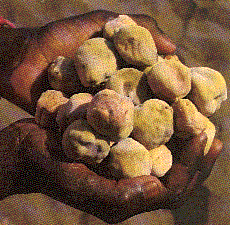
Kakadu Plum Skincare success results in a Shortage
- Details
- Written by Sammy
- Category: News
If you can grow it, now's the time to do so! Great to see this wonderful bushfood/beauty product getting so much attention!
Cooking in the Outback:
- Details
- Written by Ali
- Category: Articles
How to connect to your roots while cooking healthy food
Hunting and gathering started nearly 2 million years ago in Australia. However, in the country today, there has been a resurgence of the hunter-gather mentality and many are now interested in the cooking styles of our forbearers. These methods are not only getting us back to our indigenous roots, but they’re also healthier for us, providing a more diverse diet, with more beneficial nutrients. Today, you can combine modern technology with that of the past to create a unique and healthy cultural experience.
Cooking with prehistoric methods
Cooking, boiling, and baking your food causes a 22 percent to 34 percent loss of nutrients while microwaving and pressure cooking destroys 90 percent of essential vitamins from your meals. Therefore, many people have returned to the raw lifestyle to preserve the beneficial elements of food and get back to their cultural roots. Since food can also be unsafe to eat raw, prehistoric methods are being used, such as using the ash from fire or goals to roast and bake, or wrapping food in bark as if they were being baked. In the past, boiling food was also done with bark trough or coolamons (heating a curved dish with rock and water), and dilly bags woven from plant fibers were used to wash various foods in the river streams. These methods could all increase the healthiness of your foods while bringing you back to the past.

Gathering the hunter-gatherer tools
In Australia, hunter-gatherers used many different types of utensils in the process of cooking and collecting food. Tools and knives made from stone and glass were highly sophisticated in the outback and were used to cut vegetables and grind seeds to make paste or dough. These tools follow the same traditional path as other classic implements for cooking that are making their way back to the culinary scene today, such as sharp Japanese knives. It may be fun to get back to the roots of your ancestral hunter-gatherers by using these knives or fastening some on your own. You can sharpen stones from your yard so that you connect with nature while making a healthy, indigenous meal.
Follow the bees for sweeter foods
Sweeteners are great for desserts and to add a little hint of sweetness to your meal. However, the indigenous people of the past were not using sweet and low or sugar found in packets. Instead, they used a healthier method of sweetening that involved following the bees. Honey was a great sweetener that also had great significance in Aboriginal culture. To find the bees, indigenous people attached a feather, spider web, or glass to areas so that bees would get trapped in them and fly slow enough to allow hunters to follow them back to their hive. The wax could then be used for tools and then the honey was used to sweeten meals. Today, honey is a lot easier to find, but also provides a great link to the past and healthier alternative to sweetening your dessert.
Remembering the past can only serve to fuel the future. It provides us insight into how our ancestors solved problems and can give us a new view on how we can solve issues today. At the very least, it will provide you with a new cultural meal that can also be healthier than what you’re typically used to.
Native Foods Provide A Varied and Nutrient-Rich Diet
- Details
- Written by Ali
- Category: Articles
Ali Bishop
Around 43% of Australians are taking supplements, many of them unnecessarily as, in most cases, it is possible to eat all the nutrients you really need. This is particularly true if you include some of the diverse and abundant range of native foods that has sustained the people of Australia for thousands of years. Not only is bush food tasty and versatile, but studies have shown that many of the traditional foods have a high nutrient content, providing all the the vitamins and minerals necessary for a healthy diet.

Benefits of Natural Food
Supplements can have a place in certain diets and are useful for those deficient in iron or folic acid for example. However, it’s important to be certain that they only contain harmless and beneficial ingredients. In order to ensure purely organic nutrients in your diet, try eating more natural, native food. Indigenous plants include a range of essential vitamins and minerals, and are high in antioxidants. The native berry, Mountain Pepper, has four times the antioxidants of blueberries, so a sprinkling of this strong, earthy spice in your cooking can help fight the excess free radicals in the body that can lead to certains type of cancer and contribute to heart disease.
Vital Vitamins
Along with vitamins A and E, Vitamin C is also well-known as an antioxidant. As well as being a reliable source of energy and hydration, the Kakuda Plum contains 100 times more vitamin C than that of an orange. Vitamin C is useful in repairing body tissue and contributes to the skin’s ability to protect itself from harmful UV rays. Of course, staying out of the sun is the best way to avoid damaging the skin, but this has lead to a deficiency of vitamin D currently affecting one in four Australian adults. Mushrooms grown in sunlight are a good source of vitamin d2 and a serving of shrimp can provide 25% of the recommended daily intake of vitamin D.
Essential Minerals
Vitamin D is also necessary to help the body absorb calcium, which helps build and maintain strong, healthy bones. Calcium can be found in many native foods and is particularly rich in Lemon Myrtle and Australian Desert Lime. Bush Tomato and Wattleseed contain rich sources of iron, essential for transporting oxygen around the body, and they are also a good source of selenium, a micronutrient vital for many body functions.
Having a healthy, well-balanced diet is an easy way to meet all your body’s nutritional needs. Including tasty, natural foods found in the wild that have sustained people over thousands of years not only enhances your everyday cooking, but can provide all the nutrients your body needs to stay healthy.
Modern Twists for Bush Food Favorites
- Details
- Written by Sammy
- Category: Articles
I am so delighted to have a new writer helping me add content to this site.
Please welcome Ali Bishop!

Long before the Europeans made their way to Australia, the Aboriginal people were privy to a flourishing food culture that supported them for thousands of years. It is believed that more than 5,000 indigenous food sources found their way to into the digestive systems of the country’s oldest people. Today, an increasing number of modern-day home cooks and professional chefs alike are putting modern-day twists on traditional bush foods. While it is close to impossible to ascertain just how many bush foods find their way onto plates around the country daily, it is safe to assume that bush tomatoes, emu, wattleseed and other foods sources are finding themselves on more menus than ever before. Let’s have a closer look at just how some of our favourite bush foods are expected to satisfy the cravings of countless modern-day foodies.
Bush tomatoes are great cooking and baking
The humble bush tomato has been eaten by the Aboriginals for centuries and has also been utilized in traditional medicine. While some variants of the fruit needed to be cooked before consumption, others could simply be cut in half, with the sweet outer flesh scooped out and enjoyed. Today, bush tomatoes are readily used in salsas, curries, as a veg sprinkle and in various baked goods such as savoury loaves and muffins. Fancy yourself a slice of pizza? You can make a fragrant pizza sauce by adding up to three tablespoons of crushed bush tomato to your regular ingredients, pop it into a heat-proof bowl and microwave on high for 5 minutes, stirring halfway.
Tuck into roasted emu
Although the tall, flightless bird has a place next to the kangaroo on the nation’s coat of arms, it has long been a staple of the Aboriginal people while also often being used in traditional ceremonies and medicine. Fast-forward to 2019 and emu meat is served in some of Australia’s most sought after restaurants. Tukka in Brisbane in one such an establishment that serves a delicious smoked emu fillet stuffed with a homemade béarnaise sauce and served with a side of fondant potato and shallot compote. If you want to cook emu at home you can do it in a similar fashion as how you would prepare a typical beef steak by either grilling it over the coals or frying it in a hot pan.
Wattleseeds everywhere
The national flower of Australia, the Golden Wattle, produces a seed that has been utilized by the indigenous people for tens of thousands of years. The seeds were traditionally eaten either green and cooked or dried, ground into a flour and used to bake a traditional ‘bush bread’. In modern times wattleseed flour is used extensively in baking an array of delicious confectionary including cakes, tarts, pancakes, and biscuits. Thanks to its pleasant, nutty flavour wattleseed flour will undoubtedly be used by Australia’s array of superb pastry chefs in an increasing number of bush food inspired creations.
Bush food is a very important part of the Australian culture and should be embraced as much as possible. A lot can be learned about the traditions of the Aboriginal people by experimenting with different bush foods, putting your own unique modern spin on them.
