The Collection and Handling of Pollen
Oliver Carter
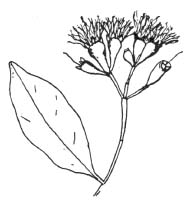 Family Myrtaceae Family Myrtaceae
Genus Syzygium
1. Determine if pollen is
present on a flower, noting that flowers open in succession over
many days. Flowers that opened yesterday or earlier will have
extremely little or no pollen.
1.1 Flowers which open
prior to or during rain (such as overnight or early morning) and if
the anthers have split and
released pollen, this would be washed away or matted or caked.
These are also useless.
1.2 Flowers must be dry
after any fog or dew.
1.3 Fresh to strong wind
will blow away most of the pollen - even light wind is a disadvantage.
1.4 Anthers may split open and release pollen from before
the flower bud opens to sometime later, eg Jambos in the cool
nights and mornings of spring may open overnight but anthers may not
split until the day is warm - perhaps 10am. Pollen would be shed
at 10pm on a warm night in November if the flower opened then.
1.5 Nectar is produced some time after the flower has
opened. This too can cause matting of anthers, stamen and pollen.
1.6 When many flowers are shedding pollen, (ie anthers
are splitting) it is usually OK to cut the anthers for their pollen even
if anthers have not opened from flowers of the same age.
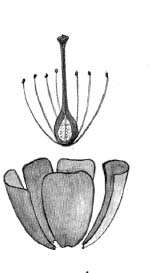 Collection Collection
2 Pollen can be collected into
an ordinary plastic specimen jar obtained from a chemist.
2.1 Cut 1, 2 or 3 flowers if
they are in line and those close together with some stem, if there is one.
The flowers are then pressed between thumb and forefinger
to make a fan shape of the anthers. This should be done in such a
way as to have the anthers mostly not touching the fingers or the thumb.
2.2 Pollen with anthers and some stamen parts is then cut
off, using the smallest scissors that can be had. The specimen jar must
be close by, with the lid off. Anthers etc must be allowed to drop
directly into the jar. However, in practice, a lot of cut stamens
will stick to the scissor blades, especially from Syzygium spp.
that have small flowers. Tapping the blades onto the edge of
the jar may help, but often the blades have to be wiped on the edge
of the jar to get them off the scissors.
2.3 A quantity of stamen
and anther material with the pollen equal to about 1/2 thimble-full
or more should be ideal
2.4 The number of flowers needed for this quantity is
enormous and ranges from one or two
or S. subicululare, about 4 or 5
a jambos, 30 of S. johnsonii and who knows how many for
S. minutiflorum or S. cumini? Perhaps 20-30 flowers of these
later would most likely be enough when it is considered how tedious it
is to work with such tiny flowers.
2.5 Nectar from matted stamens or droplets getting into
jars must be avoided. This would be about the worst contaminant
possible.
3. Storage
3.1 Any droplets of water
or nectar must be removed (this can be done by carefully using the
corner of a linen cloth or towel to touch the droplet. The
moisture will quickly soak up into the fabric.
3.2 Keep the jar out of the
sun and in a cool place.
3.3 Put the jar into the
fridge (not the freezer) as soon as it is practical.
3.4 The lid of the jar must
be taken off and left nearby in the fridge, or left partly on so as to let air circulate to dry the pollen. Fridges are dry places.
3.5 If other persons use
the fridge it would be best to leave the lid screwed on during the
day and taking it off last thing at night, putting it back on when the
fridge is opened the next morning.
3.6 It is very important to
get the lid and screw it on as quickly as you can after the fridge
door has been opened.
3.7 This is to prevent
moisture condensing on the inside of the jar from the warm air. If this is
not done , the lid must be left off for another half hour with the
fridge door kept shut
3. If possible the jar should
be kept upright and not allowed to tip over or to roll about,
because the pollen (a very tiny part of the contents) would be spread all
over the insides of the jar and its lid.
4. Posting
4.1 Posting must be done by overnight delivery.
4.2 Jar (or jars) need to
be packed securely either in a prepaid plastic bag; or a small box.
4.3 Every effort should be made to keep the pollen cool
before and even after packaging
4.4 Package should be
marked `Special care This Side Up' and `Please Do Not Throw About'
Other Notes
Overnight drying of pollen in a fridge should make it safe
enough from moisture so it will keep over the next night while in the post.
It would then need to be further dried out over the next few
days later. This treatment may keep the pollen viable for about
three weeks.
Illust. from `Propagating Australian Plants'
Why we should commercialise and cultivate native plants
Ron Mitchell
Our island continent has a unique predominantly endemic
floral biodiversity. The historical development of the native garden
concept, particularly in the past 20 years, has promoted the
utilisation of a large range of native plants - wildflowers, herbs,
groundcovers, climbers, trees, shrubs, fruits, ferns, palms, cycads,
orchids, conifers, ornamental grasses and water plants with the
horticultural attributes and versatility to
qualify their contribution to the urban landscape and the world of
ornamental horticulture.
As we enter the next
millennium, there is an ever-increasing emphasis on cultivating our own
ornamental native plants in our suburban parks, gardens and farms.
The use of native tree and shrub species in a myriad of
revegetation projects on derelict and degraded post-mining and
post-agricultural landscapes is now a well established protocol in South
East Queensland. There is now also an increasing commercial interest
in the domestication and improvement of selected species of
Australian native plants as bushfoods, wildflowers or as timber trees.
There are about 250,000 species of higher plants in the world.
Given this biodiversity it is perhaps surprising that with 10,000 years
of settled agriculture only about 100 species have been developed
as commercially significant food plants, and only about 20 of
these constitute the staple foods of the developed and developing world.
These commercial food plants
have had a history of selection
and improvement in continuous cultivation. However most of
the world's traditional wild foods, and particularly those associated
culturally with the world's indigenous peoples, have been virtually
ignored in terms of a well defined research and development
commitment, and have been generally excluded from agricultural
commerce.
Australia's agricultural
pre-history was characterised by a sparse semi-nomadic indigenous
population practising a hunter gatherer lifestyle and fire-stick farming
that promoted and facilitated the sustainable utilisation of a diversity
of wild food plants. It is estimated that there were upwards of
5,000 different bushfood species across Australia that were utilised
and harvested seasonally by the Aboriginal people.
Australia's biological
resources are unique, and Australia has an international obligation as a
responsible world citizen and signatory to relevant international
conventions (such as the 1992 Biodiversity Convention) to
enact legislation to protect endangered ecosystems and species and
to conserve our unique genetic resources. In fact Australia is
one of the 12 mega-diverse regions on the earth which account for
70% of the world's total biodiversity. Australia has about 10% of
the world's biodiversity of higher plants (upwards of 20,000
species) in natural ecosystems. Some 85% of these species are endemic
(meaning that they occur nowhere else).
Australia's natural
biodiversity and high rate of endemism is a result of a geological history
characterised by evolution in isolation, as much as the
continent's extensive latitudinal spread creating a range of climatic
zones. During its 40 million year post-Gondwanan geological
history, marine barriers isolated Australia and prevented genetic
exchanges with other continents. Furthermore the eastern and
western coasts of Australia were isolated from each other because of
an internal desert barrier; a factor accounting for Western
Australia's treasury of unique native wildflowers.
Most commercial food plants cultivated in the world today
are of Mediterranean or tropical origin, and are not
inherently adapted to the harsh climates and variable soils of Australia.
The cultivation of these exotic crops demands high inputs of
irrigation, nutrients and pesticides and in combination with
imprudent Eurocentric land management practices and attitudes over
the past 200 years has been associated with a mining of water
and soil resources, thus resulting in severe land degradation.
Furthermore the world wide trend towards the loss of
prime agricultural farming land, particularly to urbanisation and
industry, has increasingly driven agricultural industries to marginal less
arable land even more unsuited to the commercial cultivation of conventional food plants. In a
culturally diverse and populous world, humanity's dependence on such
a narrow genetic base for food crops is drawn into even
sharper focus.
The application of bio-techno-ogical solutions to existing
commercial food plants is associated with well-founded public
scepticism and concern. Arguably one of the most environmentally
sound options to maintain the world's food supply into the next
millennium is a cautious, concerted and comprehensive research and
development effort to examine options for the viable
domestication and commercialisation of traditional wild foods.
Apart from their enhanced and concentrated nutritional
qualities, wild foods under commercial cultivation are most often a
genetic reservoir of inherent adaptability to environmental change,
hardiness to adverse climate and soil conditions and tolerance to
pests and diseases.
It is perhaps too late for the
world to source and reinstate through plant breeding strategies the
genetic hardiness of the rapidly disappearing wild relatives of
domesticated commercial crop plants. Across the world the
integrity of the invaluable gene pool of wild relatives of crop plants
in the agricultural zones of developed and developing nations
of the world has been irrevocably disrupted and degraded.
Genetic erosion has been caused from excessive exploitation, habitat
destruction, air and water pollution, soil contamination, climatic
change and the introduction of exotic and modified plant species.
Perhaps of all the nations on
earth, Australia has the best ecosystems to develop an agricultural
industry based on traditional wild food plants. This is because of the
lack of scientific effort to date in the formal and domestication of
wild food plants, the relatively intact nature of our biological
resources, and present and future legislative provisions to protect and
conserve natural landscapes and the native biodiversity.
There are a number of very
sound ecological reasons for the planting or retention of native
species in the regional landscape. Native plants provide food and
shelter and the preferred habitats for our native fauna. Native plants
have evolved over millions of years in response to Australia's
unpredictable and unreliable rainfall and generally nutrient-deficient
soils. Because of this there are inherent tolerances and adaptations
of many native plant species to various types of environmental
stress when planted in difficult sites.
The presence of native plants
in buffer zones and corridors environmentally enhances the
health and vigour of ornamental plants (native and exotic) by creating
a diversity of habitats for the natural enemies of serious insect
pests. Planting natives into regional landscape also ensures the survival
of certain species that are threatened or endangered in the wild.
Native plants provide food and shelter and the preferred
habitats for our native fauna. The importance of the hollows in large
trees is but one of the essential habitat requirements for many species
of native fauna that should not be neglected. The retention of the undisturbed understorey of
large eucalypts creates a low maintenance environment that can
inhibit the growth and spread of garden weeds In addition most
native plants within their natural range of distribution will generally not
escape cultivation to become bushland weeds.
A sizeable proportion of
Australia's floral biodiversity - perhaps 2000 species - has been
utilised for ornamental attributes in amenity horticulture in parks and
gardens here and overseas. The spectrum of our native flora
includes a diversity of size, shape, colour and appearance.
Many native sclerophyllous species are cultivated for export as
Australian wildflowers. Native rainforest plants are well known and
extremely popular in urban cultivation because of their glossy
foliage in spreading canopies, colourful and fleshy fruits, and
attractive flowers.
The cultivation of native plants
also makes sound economic sense for urban gardeners, landscapers
and rural landholders. Native species are generally easier to plant
and maintain, and less demanding of water and nutrients than
exotic species. Native plant species are generally considered to be
pest and disease hardy, and their cultivation and maintained health is
less reliant than exotics on pesticides. Many native species have
desirable harvestable products (bushfoods, for example), and
this was recognised very early in the history of European settlement
of Australia.
The present trend towards low maintenance native gardens
in landscape design has been enhanced by busy lifestyles,
an awareness of the ecological and economic costs of
reticulated water, and the increasing influence of the landscape
design profession. Native planting material is now readily
available, and at reasonable cost from specialist plant nurseries. There is
a steadily increasing availability of specific information and
industry expertise and advice relevant to native plants.
While there has always been an interest and utilisation
of bushfoods by indigenous peoples and European
innovators, the transition of the production of bushfoods into
mainstream horticulture has been slow, and subject to cultural bias and
apathy. There has unfortunately been little effort (apart
from macadamias) in creating an appreciation or developing a
demand for our unique native edible plants.
The bushfoods industry is still relatively new, and has
been heavily reliant to date on wild harvests. The commercial
cultivation of bushfoods overcomes the seasonality and high costs
of production and variable quality associated with the bush
harvested product. Furthermore there are now restrictions
on bush harvesting for many species to protect native habitats and
the natural biodiversity.
It is likely that ecologically
sustainable and environmentally sound wild harvest will continue because of linkages with
cultural tourism and ecotourism. Commercial production however
will reduce the harvesting pressure in the wild and result in
greater quality control.
Commercialisation will also counter the future
overseas competitive pressure from the loss and cultivation offshore
of our unique genetic resources. Commercial
production through plant breeding and variety improvement will
ensure higher yields and greater economic viability for
farmers through more reliable and regular supply.
The bushfoods industry enjoys a number of inherent
competitive advantages, not the least of which is the fact that most
of these plant foods are endemic. The bushfoods industry
provides opportunities for farmers to specialise and or
diversify production systems and develop niche markets and is
compatible with other new native plant based rural industries such
as farm timber and native wildflowers.
The development of commercial production systems has been
facilitated from alliances within the network of
enthusiastic permaculturalists and organic farmers. The organic and
clean and green approach to bushfoods production is
compatible with the objectives of resource efficiency and low
maintenance sustainable land use practices, using natural pest
and disease control, and having minimal adverse environmental impacts.
For many of the commercial bushfood species, the
propagation and cultural requirements have long been recognised
because of their utilisation for ornamental attributes in
amenity horticulture. Site specific cultivation and production of
the local native bushfood is an industry that is suitable for
small landholders, with vertically-integrated and value-added
cottage industries and niche marketing.
The utilisation of local native tree and shrub bushfood
species provides and enhances wildlife habitats, decreases land
degradation and provides for the conservation and protection of
soil and water resources. The native bushfoods industry in fact
provides an economic incentive for the conservation of
endangered plant species.
The production of clean bushfood produce, free
of chemical residues and genetically modified inputs and
subject to organic certification, enhances consumer
confidence and reduces the environmental load from conventional
farming practices. The bushfoods industry provides Australia with
the real opportunity to develop a truly native fine foods
cuisine. Give bushfoods a go!
Ron Mitchell is well known author and an exponent
of agro-forestry.
The Northern Bushfood Association
Larry geno
In late 1999, the Northern Bushfood Association, Inc,
was formed to complete the national coverage of representative
regional bushfood groups in Australia. Its stated goals and
objectives are:
1. To facilitate the
development of local, bioregional bushfood groups within the
association.
2. To support and encourage the development of
national Australian foods and flavours from northern Australia.
3. To represent all sectors
of the bushfood industry in Northern Australia to State and
Federal governments.
4. To liase with other regional organisations and
governments to foster the interests of the bushfood industry
in Northern Australia.
Conceptually, it seeks to be an `umbrella' group for small,
local bushfood groups.- the most important level of
association for long term networking and success. NBA supports
local groups by covering incorporation and insurance and
facilitating networking between local groups, assisting the
formation of new local groups and representing their interests in
larger arenas. Local groups are then free to address the
important local needs of meetings, field trips, training and networking
to establish the essential bonds between producers,
processors and marketers. Forming and growing groups in new
crops has always been difficult for a
wide array of reasons; indeed, several have come and gone
in recent years. Where groups form that try to do too
much, cover too wide an area or depend on too few people
with experience, they often do not persist.
NBA hopes to solve this dilemma by sharing and
cooperation. Membership includes full members as local groups
and associate members as individuals in areas yet to form a
local group. The NBA management committee is formed from
these members. NBA is flexible with each member, assisting as
much or as little as the member needs. A collaborative newsletter
has been proposed, including sections from each local
group along with sections from larger state, national and
international issues. It intends to cooperate with other regional groups
to present a unified national front to lobby for funding,
legislation and other support. It intends to do only what local groups
can't do and only what they want done. The geographic cover
of NBA is yet to be fully defined by its membership but is
generally seen as the wet and dry tropical and sub tropical
environments of Australia with common bushfood species and
products.
Several embryonic groups are considering forming and
interested individuals exist in many areas. NBA wants to hear
from those bushfood enthusiasts and to help them succeed.
Book Review
Mother and Child - the women of Warnum
as told to Margaret Stewart
Magabala Books
RRP $19.95
Sit down you mob - and listen
I must admit to opening this book with
some trepidation - what's this got to do with
bushfoods? I thought. As it turns out, it was not just one of the
best reads I have had in a long time, it also gave me an opportunity
to appreciate (once again) the innate wisdom of the original
inhabitants of this land - and this has much to do
with bushfoods and the way in which we think about our land and what we
produce from it.
If there is a single theme to
this book of collected tellings, it is `learn from the earth and
be strong'. The older women of Warmun are heart-broken by
the decline of their children and grandchildren, the loss of
not just their health but their own inner purpose. This book
asks them, in a way, to sit down you mob and listen! Listen now
before all the knowledge and old ways are gone, listen before
the children have become a statistic, listen before the proud
and healthy heritage which was is swallowed by white man's ways.
The book is one for women and speaks mainly of
gathering foodstuffs and caring for pregnant women and midwiving them. As you read it,
however, you will begin to understand the very basics of the `old
way'- these people lived off the land and understood it as well as we
do our fridge.
Margaret Stewart (a white lady) has done us all pround by
living with and listening to the women of Warmun - we can all
learn much from reading her retelling of their stories.
Very highly recommended.
Ngalangangpum Jarrakpu
Purrurn,`Mother and Child' is available directly from
Magabala Books:
PO Box 668 Broome, WA 6725.
Ph: 08 9192 1991
Fax: 08 9193 5254
email: magabala@tpgi.com.au
CD ROM Review:
Wild Plants of Victoria
Here is an easy-to-use, well researched and delightfully
full colour resource for people who are serious (or simply
curious) about our native plants.
Install the CD and you have a choice of searching by area
or by species. The interface is easy to use and you can search
and find an enormous amount of information with relative
ease. You can print out the results of our search and apply
filters to pinpoint your search to such things as Koorie use,
cultivation and much more.
Not totally bushfood orientated but still a great
resource for anyone with an interest in our native plants - most
especially those of Victoria.
I look forward to the Queensland CD. And the NT...
the Ed.
The Wild Harvest of Wild Orange
(Capparis mitchellii)
Col Walpole
Recently, we went out to Irongate Environment Park,
a marvellous piece of remnant Belah scrub near Pittsworth
on the Darling Downs. It's a pity there aren't more places like it.
On the roadside verges near the park there are many wild
orange trees. From a few of these, we harvested around a fruitbox
full of the large fruit. The tree can be identified by its dark
green leaves and striking flowers. the flowers are yellow to
cream with large anthers that stand perpendicular to the petals.
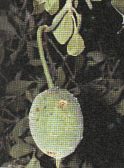 Capparis mitchellii Capparis mitchellii
The fruit, however is an
acquire taste. In fact, I found it rather horrible, reminiscent of
juicy friuot chewing gum mixed with kerosene - on the trip home
the car was filled with a smell very like the taste.
As bushfoods go, the fruit is very large, some of those I
collected were the size of a large orange.
Capparis mitchellii is a member of the caper family and there
are many other Capparis to be found - some in the rainforest
- C. sarmentosa (flesh edible but not enjoyable) and some
much further west - C. spinosa (flesh edible and sweet, seeds
very hot).
To germinate the seed, you need to have fresh fruit, otherwise
the seed goes hard and dormancy sets in. Even if you get the
seed to germinate, it is touch and go. Many of my plants died
when they were about 6" tall. David Allworth the botanist says this may be due to a lack of mychorizal fungi and I intend
to obtain soil from around established trees to add to my
potting mix.
My opinion on this plant is cautious. I think the fruit is
definitely an acquired taste. It is plentiful on the Darling
Downs from Feb-April and may be a good opportunity for wild
harvest. That's if it's not attacked by the Capparis butterfly larvae.
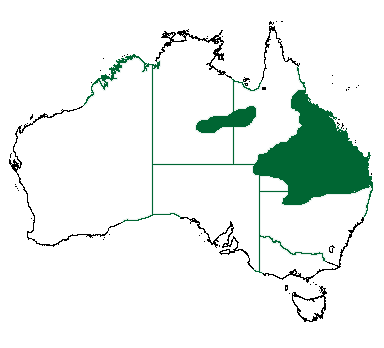 Distribution of Capparis mitchellii, from Peter Bindon's `Useful Bush Plants' Distribution of Capparis mitchellii, from Peter Bindon's `Useful Bush Plants'
A Sampling of Col Walpole's Plant List -
Tubes $1.50 plus postage
Austromyrtus dulcis - Midyim berry
Kunzea pomifera - Muntaries
Podocarpus elatus - Illawarra plum
Rubus parvifolius - Native raspberry
Syzygium paniculatum - Magenta lilly pilly
40 Alford St, Toowoomba, Qld 4350. Ph: 07 4639 2283
From the Bushfood Starter Kit - Bunya
Araucaria bidwillii
 General notes: General notes:
Usually a scattered emergent in rainforests. Should not be planted where falling
cones might cause damage or injury. Large starchy textured nuts within a tough, woody
casing from the cone of the huge Bunya pine tree that is native to New South Wales
and Queensland. These nuts are similar in size and flavour to chestnuts and make a
delicious bunya nut puree. Each nut is encased in a thin woody shell which can be
sliced with a knife after boiling the nuts and while they are still hot. The shelled nuts can
then
be blended to make a pastry, used as a
potato substitute in curries and stews, minced for use in chocolates, nougat, ice-cream
or other desserts and even preserved in sweetened rum.
Edible portion: Nut (seed)
Harvest period: Dec-Feb - has shown a 3year cycle of `bumper' crops
Yrs to maturity: 5-8
Form: Large tree - to 30m
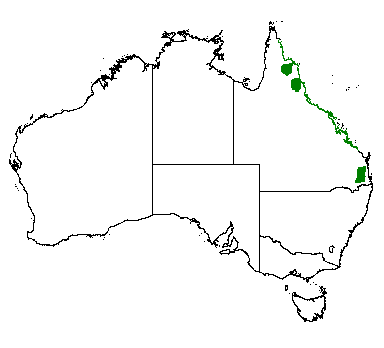 Natural Distribution/Growing conditions: Natural Distribution/Growing conditions:
Rainforests and open forest in coastal SE Qld inland as far as the Bunya
Mountains. Also in a small `pocket' in Northern Qld. Trees have been observed
bearing well in dry areas of SA.
Climatic/microclimatic conditions:
Sub tropical to temperate. Favours sunny positions
Management reference:
Little research available. Requires good deep soil for best development.
Traditional Aboriginal Use:
An important food, especially during the triennial Bunya feasts
Density: A large tree probably not suited to plantation
Yield at maturity: A good, mature tree, in the triennial harvest, can drop as many
as 70-80 cones. Net kernel from each cone is around 1kg.
Harvesting: Cones drop to the ground - removing nuts from the cone and the
leathery outside coating, as well as the very tough shell, is still a time consuming process.
Supplied as: Whole raw seed or roasted & ground or frozen. New - raw kernal ground and dried
Typical value adding: De-shelled and vacuum packed, dried, pickled, flour, glaced
Current purchasing price: $3-$8/kg - price unknown for value added
products (dried, vacuum packed, etc.)
Perceived demand: Usually good - but `heavy' seasons glut the market.
Recipes
The following have been taken from Juleigh Robins' recipe book
`Wild Lime', Allen & Unwin. RRP $24.95. Available from the magazine;
Stir-fried Prawns with Native Tamarind
To serve 6
1.2 kg fresh green prawns, for 30 tails
31/2 teaspoons (20 ml) canola oil
1/2 cup (75 g) native tamarind, chopped
6 spring onions, chopped
3 cloves garlic chopped
2 small or 1 large red capsicum, chopped
2 teaspoons (10 g) fresh ginger, peeled and grated
a pinch of salt
a pinch of native pepper
generous 1/2 cup (125 ml) dry white wine
200 g Warrigal greens
Peel and clean the prawns and cut along the back to open and butterfly the meat.
Heat the oil in a wok on a high heat until very hot and add the chopped ingredients.
Toss and cook for 2-3 minutes.
Add the prawns, salt and pepper, and wine, and cook for a further 2-3 minutes, tossing
frequently.
Wash and lightly steam the young warrigal greens and make a bed in the centre of a
large dinner plate.
To serve, arrange the prawns and vegetables on the warrigal greens and drizzle over
the remaining pan juices.
Riberry Marmalade
Steven Pashley, the talented Executive Chef from Brisbane's Gazebo Hotel, introduced us
to this riberry marmalade. It is an easy recipe to follow, and gives a great result; the limes in
this marmalade really give it a zing. It makes a perfect breakfast condiment, especially on
fresh homemade Wattleseed Bread. It is also an ideal glaze for pork or chicken dishes.
To make 6x250ml jars
4 limes, seeded and finely sliced
2 lemons seeded and finely sliced
5 cups (1 .25 litres) water
8 cups (800 g) fresh or frozen riberries
1.5 kg sugar
Preheat the oven to l30oC (300oF).
Simmer the sliced limes and lemons in the water for 30 minutes. Add the riberries.
Heat the sugar on a tray in the preheated oven for 10 minutes and then add to the fruit
mixture. Simmer rapidly for an hour
Test the marmalade by spooning a small amount of jam onto a chilled saucer, and placing
it in the refrigerator for a few minutes. The marmalade is ready when it holds its shape on
the saucer and doesn't run.
Pour the marmalade into sterilised jars while it is still hot and seal. It will keep for 6
months, Refrigerate once opened.
Wattleseed Pasta
To serve 6
1 tablespoon and ground wattleseed
2 tablespoons (50 ml) water
31/2 cups (500 g) plain flour
a pinch of salt
5 x 55 g eggs
4 litres water
1 teaspoon (5 ml) olive oil
(20 g) roasted
Soften the wattleseed by combining with the water and heating to a
simmer. Remove from the heat and allow to cool. The wattleseed will absorb the water and
produce a rich, dark-coloured paste.
Once the wattleseed is ready, combine with the plain
flour and salt in a food processor. Add the eggs, one at a time,
and the oil, and process quickly until the mixture forms a
dough that just holds together
Divide the dough into three and wrap in a clean cloth
or plastic wrap, and rest for at least 30 minutes in the
refrigerator before rolling out.
Bring the water to the boil.
Take the dough from the refrigerator, lightly flour and roll
it through a pasta machine to the desired thickness. Cut
into your favourite pasta shape - fettuccine, tagliatelle and so
on. If you don't have a pasta machine, use a rolling pin and
roll out the dough on a lightly floured surface to about 2
mm thickness. Using a sharp long-bladed knife, cut the pasta
into the size and shape that you like.
Pour a small amount of oil into the boiling water anti
gently place the pasta ribbons into the pot. Fresh pasta cooks
very quickly, so watch it. As a rule of thumb, the pasta is
usually cooked by the time most of the pasta rises to the surface.
Take the pot from the heat immediately and drain the
pasta. Refresh the pasta in a large quantity of fresh hot water
and toss with some cooking oil to coat and keep it from
sticking together
Try this pasta with a Bush Tomato and Chilli Salsa and
fresh herbs such as wild thyme, holy basil or native basil, or
fresh garden herbs. Or, you could make wattleseed fettuccine
and serve it with a sauce made with button mushrooms,
field mushrooms and shiitakes.
Snippets from the bushfood discussion group on the net...
Hi all.
I am very keen to get some
bunya nuts. The best way to do them is to bring them to the boil &
simmer gently 5-10mins, then on a wooden chopping board use
an (authentic) Stanley knife to slice one side of the nut. Then
squeeze the top & bottom & the shell opens & allows you to pop
out the nut. Then mince in food processor & freeze (no additives).
Only pull 2 or 3 out of the
water at once, as the shell is only pliable when hot & wet, & will
become hard, slippery & brittle after only a couple of minutes.
Bunya absorbs fats, oils,
creams etc & thickens nicely, making starchy soups, gumbos,
dough, pastry, stuffings, terrines, roulades, puddings etc. It falls
apart in water and is better with oils.
Goose, Duck, Yolla, Lamb are all good as they are fatty.
Also vegies in maca oil are
good with bunya. Macadamia oil sets off it's flavour & gives a
shiny lush texture.
If anyone has any other native nuts in 2 or 3 kg quantities I
am keen to have a play & develop some new menu items.
Chutney of fresh riberries: I
gathered HEAPS last Oct/Nov in
Sydney & did all of my
preserves of Riberry, onion, cider vinegar, brown sugar, chilli, water,
kaffir lime leaves (fresh) simmered 2 hours or so.
Chutney can also be reduced
into a nice natural "Jus"..a sauce made from beef
bones,carrot onion celery bayleaves, red wine tomato paste thyme,
peppercorns etc simmered for 8 hours then strained & reduced by 50
- 60 % (sort of like gravy without
flour!). This gives a brown meat sauce with a piquant tang.
Anyway, if anybody can help me with bunya's, Australia Post
or Ansett both do 3kg airfreight bags. Give me an email & we
can do something.
Brian, your Muntharies ended up in a nice Sweet Munthari
sauce, which is like a sweet chilli sauce...very heavy sugar &
palm sugar base in water, cooked until thick with onion, a bit of
dice apple & coriander seed. I serve it currently with homemae
Kashmir Chicken spring rolls with the
Munthari sauce in one dish, and a small dish of sour cream
topped with finely sliced red onion & fresh chopped coriander.
The compliments are deafening. Thanks mate.
Auschef, (Shane Brierly) Banksias Restaurant,
Botany Bay Sydney
On research -
Our current RIRDC research programme - the focus is
on commercial bushfoods which, through practical experience,
are already widely accepted as safe to use, although in many
cases little supporting scientific information has been available.
The first analyses are under
way at the University of Newcastle under the direction of
Professor Wills, and will conclude next year. No results are available
so far, but they will be published as soon as possible. We are
still interested in discussing matters that might affect the safe uses of
particular bushfoods (including any queries from past
experience) with people involved with production, sales or research in
volving Australian native bushfoods.
Merv and Elwyn Hegarty.
Dear Bushfooders
I have a friend who is doing
some tissue culture work with `ordinary' capers
(Capparis spinosa). He would now like to have a
try with native capers (e.g. Capparis arborea, C. mitchellii,
C. canescens, C. lasiantha, C. sarmentosa, C.
loranthifolia). Does anyone know where he might be able to get hold of
seed of any of the native species? Thanks very much
Janet Gorst
Integration of mixed plantings taking advantage of the
diversity and a lot of them [plantings] - if coordinated = a commercial
future. Maximum carrying density is dependant on ground prep
and layout, not only of the planting, but also of the irrigation -
if planned = a commercial future.
Planting program must be cast for at least seven to twenty
years, with annual performace review, from which program is refined
- long term commitment = a commercial future.
Accumulation of dispersed knowledge is limited by
communication and degree of mutual self benefit - rapid
compilation and dissemination = a commercial future sooner.
On the subject of public/member resources what extra info
would we need to kick off a database of our own? (See article page
20 - the Ed.)
Species - here's my list of
likelies which I am favouring in my planting:
Diploglottis (campbellii
& cunningahmia). Acronychia (acidula, oblongifolia and wilcoxiana) as I'm not sure which is
best - though I'm leaning towards oblongifiolia. Davidsonia (jerseyana and pruriens). Syzygium (lueh-manni, of course, though
I'm putting in a stack of others)
Acacia (sophorae, sauveolins and complanata at this stage).
Local conditions: I'm in high rainfall, cool rainforest with
good basalt soil.any more thoughts?
Bede Ireland
Hello,
Presently I am working with plant tissue culture group
of CQU as a researcher. Very soon I will be starting my Ph.D.
as well. I am looking for such a Bush food crop that is
economically quite significant but very
difficult to multiply by seed
or any other conventional method. It would be very nice if we
can multiply such type of plant by tissue culture. Your ideas are
welcome.
Kind regards and best wishes,
Poonam BHATIA
Primary Industries Research Centre
Central Queensland University
Rockhampton, Qld 4702
Telephone: 07-4930-9596
Fax: 07-4930-9255
E-mail: P.Bhatia@cqu.edu.au
Hi all - Have some products coming on line shortly, hope
that someone can give me some idea as to current market
prices (wholesale) and possible purchasers for the following lines ;
Burdekin Plum - (Pleiogynium timorense). Lemon Aspen -
(Acronychia acidula). Lady Apple - (Syzygium
suborbiculare). Megenta Cherry - (Syzygium
paniculatum). Herbert River Cherry - (Antidesma
bunius).
We will have commercial quantities available and can also
provide plants (or cuttings) to anyone interested. Graeme Ison
Mareeba FNQ
Hi Brett,
Some advice on Davidsonia pruriens var.
jerseyana; they can be pretty hard to establish
from scratch in full sun and exposed areas. They do best if you
can get something going beforehand which gives about 10 -
15% shade. Other rainforest plants can be a bit slow for this and
a lot of people use Pigeon Pea as a nurse crop. It's
fast-growing, a legume and offers a good level of shade - I find that it
attracts and builds up populations of Monolepta beetles, which
then go on to eat the new flush of the Davos. Pigeon Pea also tends to split and fall over in strong winds.
I prefer to use Crotaleria, which has a better trunk structure
and is easier to manage, especially in a commercial orchard - it
doesn't seen to attract the Monoleptas, but they would still probably
eat it (what have others found on this issue?). The foliage can be
regularly cut and used as mulch around the plums. The other
really important thing about establishing Davos is to grow them
on to a good size in their pots before you plant them out. If
you can get them to about 500 - 600mm with a good, solid
trunk they have a few more reserves to cope with the shock of
planting out. Good soil OM and nutrition is, of course, pretty
important too.
Best wishes, Anthony Hotson.
Tuckombil Native Foods
PO Box 281, ALSTONVILLE NSW, 2477
ahotson@nor.com.au
Fax/Tel +61 2 6628 5558
Canberra Organic Growers Society Inc.
COGS is a non-profit organisation providing a forum
for organic growers in the Canberra region. COGS
encourages the community to adopt organic growing methods.
Members have access to community gardens, meetings;
and receive the COGS Quarterly publication.
For further information, contact:
Canberra Organic Growers Society, PO Box 347,
DICKSON, ACT, 2602
Places on the Net...
Acacia in Australia: Ethnobotany and Potential Food Crop -
www.hort.purdue.edu/newcrop/proceedings1996/v3-228.html
Australian Dry-zone Acacias for Human Food (CSIRO publication) -
www.ffp.csiro.au/tigr/atscmain/whatwedo/publications/acfoodbk.htm
Australan Native Fine Foods - www.bushtucker.com.au/
Australian Native Gourmet foods from the Bush - www.shopaustralia.com.au/shoptuck.html
Australian New Crops Home Page - www.uq.edu.au/~gagkrego
Blue Gum Fine Foods - www.users.bigpond.com/matterhorn.htm
Bunya nuts - www.anu.edu.au/Forestry/wood/nwfp/bunyanut/bunyanut.html
Bush chocolates - www.sofcom.com.au/mall/bushchoc/
Bush Tucker Glossary - www.foodwine.com/food/egg/egg0597/glossary.htm
Bushfood plants for Northern NSW - nornet.nor.com.au/environment/greenwork/bfood.htm
Bushfoods of W. Qld - www.dpi.qld.gov.au/dpinotes/vegetation/vegetation.html#bush
Bushlink Inland Australia Online - www.bushlink.com
Ceres Nursery - www.cres.anu.edu.au/
Danekas Oz Food Discussion group www.netfx.com.au/danekas
DPI QLD - www.dpi.qld.gov.au
F@rming Online - www.rpl.com.au/farming
Farmwide - www.farmwide.com.au
Food Values and Australian Bush Foods - www.dhn.csiro.au/foodcomp.html
Gil Freeman of The Southern Bushfoods Association - gilf@compost.apana.org.au
Grafting natives - www.anbg.gov.au/hort.research/graft.table.html
Kondinin Group - www.kondinin.com.au
Lemon myrtle the essential oil - www.ffp.csiro.au/publicat/articles/lemon.htm
Longreach Bush Tucker - www.users.bigpond.com/blackmare/
Mother Nature's Bushtucker - www.bigvolcano.com.au/custom/bushfood/bushfood.htm
Nanydjaka plant use - www.octa4.net.au/dhimurru/plants.html
National Farmers Federation - www.nff.org.au
Nicky's Oz Food Page - www.zeta.org.au/~nickyg/Food.htm
NSW Ag - www.agric.nsw.gov.au
Prim Ind & Resources SA - www.pir.sa.gov.au
Production of Bushfoods - www.greenwork.org.au/bushfood.htm
Quandong - www.biodiversity.environment.gov.au/plants/manageme/maldong.htm
Red Ochre Grill -www.redochre.com.au
RIRDC New Plant Products - www.rirdc.gov.au/programs/npp.html#components
SGAP Quandong, wild lime etc - www.silo.riv.com.au/SGAP/
SGAP - www.farrer.riv.csu.edu.au/ASGAP/
Taste of the Bush (Melb. Uni) - www.arts.unimelb.edu.au/amu/ucr/student/1997/silva/
Tasting Australia - www.foodwine.com/food/egg/egg0597/bushtuck.html
The Map Shop - interesting books as well - www.tne.net.au/mercator/mscooking1.html
Witjuti - Original Australian Bush Tucker - www.sofcom.com.au/mall/witjuti/
Groups
Arid Land Growers Ass Inc
Graham Herde
Nectar Brooks Station via
Port Augusta
SA 5700
Ph: 08 8634 7 077
Queensland Bushfood
Association
Interim Committee: Chair - John King.
Contact:Sammy Ringer
Ph: 07 5494 3812
email: bushfood@hotkey.net.au
South East Sustainable Bushfood Industry Group
Secretary: Terence Carpenter
443 Kameruka Lane
Candelo NSW 2550
Ph: 02 64 932 227
Fax: 0264 932 225
Australian Native Bee Research Centre
Promotes the preservation and enjoyment of Australian
native bees. Publishes 'Aussie Bee'.
PO Box 74
North Richmond, NSW 2754
Fax: 02 4576 1196
email: anbrc@zeta.org.au
Rainforest Seed
Collective
Co-ordinator:
Yahana Treweeke
Private Mail Bag, Bellingen
NSW 2454
Ph: 066 552 233
$20 for 4 issues ($10 low income).
Southern Bushfood
Association
President: David Thompson,
RMB 7390A Wartook VIC 3401
Ph/fax: 03 5383 6247
email: dinkumfare@hotmail.com
General membership: $35 pa
Commercial membership: $50 pa
6 newsletters per year
Australian Quandong
Industry Association Inc
President:
Robin Schaefer
PO Box 236
Upper Sturt, SA 5156
Ph: 08 8584 7781.
Fax: 08 8584 6350
Seed Savers Network
Contact:
Dierdre
PO Box 975, Byron Bay
NSW 2481
Ph/fax: 066 856 624
Newsletter, seed exchange
Southern Vales
Bushfood
Michael Brandwood:
PO Box 344
Clarendon
SA 5157
Ph: 08 8383 6481
Fraser Coast Essential Oils Association
PO Box 26
Maryborough QLD 4650
Assists in the growing and distillation of Australian natives.
Ph: 07 4121 4588
Fax: 07 4121 4566
Henry Doubleday
Research Ass.
816 Comleroy Rd Kurrajong NSW 2758
Est. 1970 to promote organic methods and principles in gardening
and farming.
Great newsletter.
Northern Bushfood Ass., Inc
An umbrella group for bushfood enthusiasts in Northern Australia.
Secretary: Larry Geno
434 Ilkley Rd
Ilkley Qld 4554
Ph/Fax: 07 5478 8815
Australian Plants Society Web Page:
http://farrer.riv.csu.edu.au/ASGAP/
Australian Plants Society
Queensland:
PO Box 586
Fortitude Valley
Qld 4006
Ordinary m'ship: $30 pa
Student: $22 pa
Australian Plants Society
NSW
PO Box 744
Blacktown NSW2148
Publishes 'Australian Plants' and 'Native Plants for NSW'
Ph: 02 9621 3437
Fax: 02 9676 7603
Australian Plants Society
Food Study Group
Lenore Lindsay:
323 Philp Ave
Frenchville
QLD 4701
Newsletter
Bio-Dynamic Agriculture Association
PO POWELLTOWN VIC 3797
Ph: 03 5966 7 333
Fax: 03 5966 7433
Bio-Dynamic Farming & Gardening Assoc. in Aust
PO Box 54 BELLINGEN NSW 2454 Ph: (066) 55-0404
Fax: (066) 55-0399
Biological Farmers of
Australia
PO Box 3404
Toowoomba Village Fair
Qld 4350
Ph: (0746) 393 299
Fax: (0746) 393 755
Canberra Organic Growers Society (COGS)
PO Box 347 Dickson, ACT 2602
email: cogs@netspeed.com.au
Organic Herb Growers of Australia Inc
P.O. Box 6171 SOUTH LISMORE NSW 2480. Ph: (066) 291 057
Tree Crops Centre
PO Box 27, Subiaco, WA 6008
Phone: (08) 9388 1965
Fax: (08) 9388 1852
Bushfood Plants Found here...
VIC: Melbourne
St Kilda Indigenous Nursery
Coastal species - phone for full
species list.
03 9645 2477
525 Williamstown Rd,
Port Melbourne
Edible Gardens
Permaculture nursery with a
large range of edible native and rainforest plants
37 Bangalla St, Auchenflower
Ph: 07 3720 8950
Northern NSW
Cornucopia Nursery
Wide range of species
55 Station St, Mullumbimby NSW 2482.
Enquiries:
web site:
http://users.mullum.com.au/~botanica
email: botanica@mullum.com.au
SA - Port Augusta
Nector Brook Discovery Plantation
Santalum spicatum (Australian
Sandalwood) Propagated to order for Autumn and Spring planting. In biodegradable
tubes with host plants. $3.50 each.
Box 393 Port Augusta 5700
NSW: Kenthurst
Royston Petrie Seeds
Large range of edible Acacia+
Bunya Pine, Brachychiton, Cissus,
Syzygium, Lomandra, Macadamia, Podocarpus, Santalum.
Phone for full seed list.
Ph: 02 9654 1186.
Fax: 02 9654 2658
77 Kenhurst Rd, Kenthurst, NSW 2156
QLD: Cairns (Atherton Tableland)
Yuruga Native Plants
Specialist growers of native
plants (including bushfoods) for Northern Aust. Phone for price list:
07 4093 3826
Kennedy Hway, Walkamin 4872
QLD: Yeppoon
Yeppoon Rainforest Nursery
Native rainforest species.
Bushfood plants. W'sale & retail
Ph/fax: 0749 393 963
Mobile: 0419 683 157
PO Box 109 Yeppoon 4703
QLD: Yeppoon
Yeppoon Rainforest Nursery
Native rainforest species.
Bushfood plants. W'sale & retail
Ph/fax: 0749 393 963
Mobile: 0419 683 157
PO Box 109 Yeppoon 4703
S.E. Qld: Tallebudgera
Bush Nuts Native Nursery
A propagation/wholesale nursery with
over 200 rainforest and rainforest margin species
64 Syndicate Rd
Tallebudgera Valley 4228
Ph/fax: 0755 338 105
NSW: South Coast
South Coast Flora
Species suitable for temperate/cool
climates, including: Illawarra plum, Mountain
pepper, Cool climate Syzygium spp, native herbs
and teas.
146 Dignam's Creek Rd, Via Cobargo NSW 2550
Phone: 026 493 6747
NSW: Bowraville
SPIRIT OF THE RAINFOREST
Growers of Davidson's Plum - NSW species. Tubestock:
2" - 70c 3" - $1.50
Ph: 02 65647426
e-mail: nahele@midcoast.com.au
'Nahele', McHughs Creek Road,
via Bowraville, NSW, 2449.
Qld Sunshine Coast
Barung Landcare Nursery...
carries a wide selection of rainforest bushfood
species.
Contact us for a listing:
Ph: 07 5494 3151
Fax: 07 5494 3141
email: barung@sun.big.net.au
Bushfood horticulture consultant and specialist grower of Tasmanian
Native Plants.
Kris Schaffer
Dip. Art., Cert. Hort., MAIH
Ph/Fax:
03 6239 1575
Mobile:
041958 7139
Ph/Fax: 0886 347 077
First Queensland Bushfood Association Meeting
Rob Reason
On Saturday, 19th February, my wife Denise and I attended the inaugural meeting of the Queensland Bushfoods Association at the Mt Coot-tha Botanic Gardens. We are pleased we made the effort
Being relatively novice 'bush-foodies' . we feared that we might be out of place, that we would have little to contribute, that ".he meeting would be o\ erlx :.ong and formal, that it might be dominated by those with commercial interests, that it might not suit our needs and so on.. .we needn't have worried! We had a thoroughly enjoyable day and we can't wait for the next meeting on May 6th In the morning we were taken on a bush tucker tour of the Gardens by volunteer guides and then we had further opporturutv to mix and mingle at an informal picnic lunch in one of the Libran meeting rooms.
The pikelets spread with Coronata fig and Lilly pilly jam supplemented well the packed lunches and junk food. Printed material was available for purchase and distribution. Chairman John King opened the formal proceedings with a brief welcome and an outline of the meeting, then introduced himself and invited other members to do likewise - a great idea' It was a \\ onderful. bonding experience. It w as exciting to discover that, :h:u_!'. v\e came from varying backgrounds with different expertise, we all had a common, strong desire to share information on bushfoods and make the association a goer.
We were also unanimous in our thoughts about the following.
* that we should allow the Association to evolve slowly and only bite off bit-sized chunks at present
" that we should be content at the moment tV.icwmg a broad aim before defining specific objectives (to share and disseminate information).
* that our meetings should be as informal and brief as possible and include educational and social components.
* that we should meet four times a year at the Gardens.
1 am certain that our Association will go from strength to strength if we keep the above in mind 1 look forward to meeting many new faces at our next gathering.
If you can, please bring something to show and tell or taste! If not, just bring your ideas and enthusiasm. You will be most welcome. Roh Reason
Rob Reason is a retired public servant. He and his wife Denise are developing a rainforest garden on their acreage at Everton Hills where they are experimenting with bushfood trees.
A Forgotten Naturalist of the 19th and 20th Centuries
Florenz Bleeser By Christine Jones
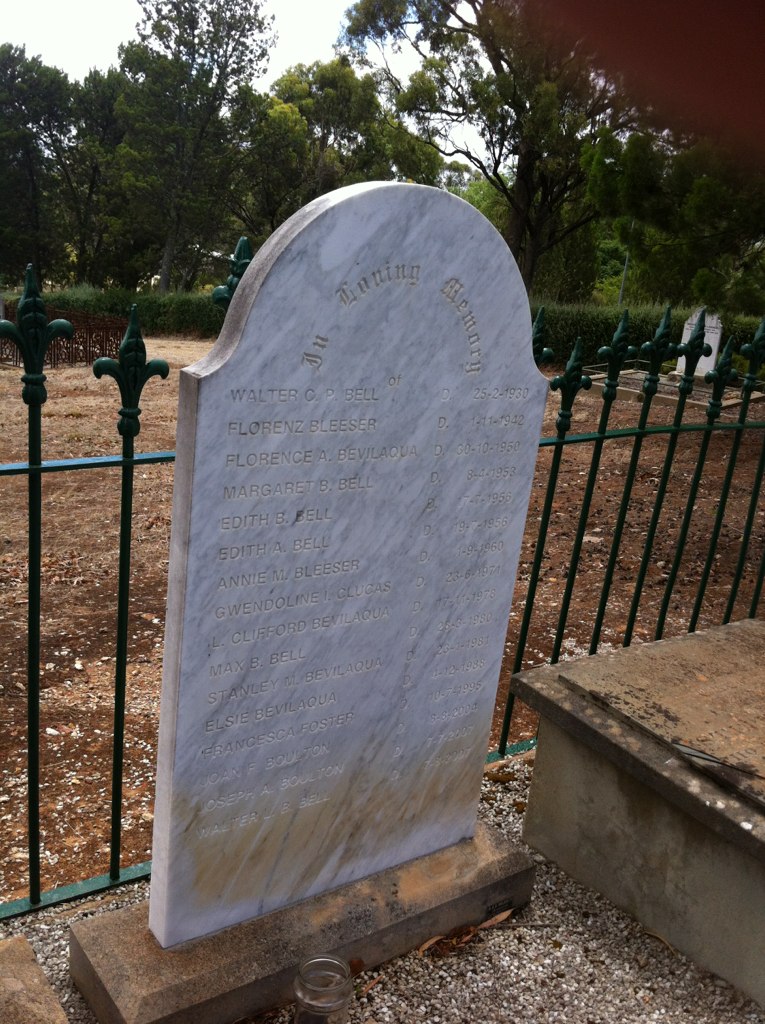 This is a short article on Flo Bleeser who was a naturalist of Darwin, and who is largely forgotten despite his knowledge of indigenous people, their culture and the significant contribution he made to the botanical knowledge of Australian flora and fauna. Florenz Bleeser, better known as `Flo' or "Boss Bleeser" or the "Butterfly Man" was once a postmaster of Darwin, and in charge of the transcontinental telegraph line. He travelled extensively the Northern Territory from the west coast to Arnhem Land, to the Aru islands, to the southern limits of the Northern Territory postal district and as far as Attack Creek. During his time in the Top End he collected botanical, marine and insect specimens. Flo developed a love of living things from his father, who had accompanied Richard Schomburgk on his explorations to British Guiana during 1840-1844. His father had been responsible for pressing and storing Schomburgk's specimens, skills which he passed onto his son, who shared the same passion and life long commitment as a naturalist. This is a short article on Flo Bleeser who was a naturalist of Darwin, and who is largely forgotten despite his knowledge of indigenous people, their culture and the significant contribution he made to the botanical knowledge of Australian flora and fauna. Florenz Bleeser, better known as `Flo' or "Boss Bleeser" or the "Butterfly Man" was once a postmaster of Darwin, and in charge of the transcontinental telegraph line. He travelled extensively the Northern Territory from the west coast to Arnhem Land, to the Aru islands, to the southern limits of the Northern Territory postal district and as far as Attack Creek. During his time in the Top End he collected botanical, marine and insect specimens. Flo developed a love of living things from his father, who had accompanied Richard Schomburgk on his explorations to British Guiana during 1840-1844. His father had been responsible for pressing and storing Schomburgk's specimens, skills which he passed onto his son, who shared the same passion and life long commitment as a naturalist.
Bleeser befriended all he met, and gained considerable knowledge of the habits and culture of the indigenous peoples. He collected artefacts and learned the language of the Larakia people, which he spoke fluently. Nemarluk an elder of the Larakia entrusted him with a message stick for safe passage throughout the land, and Bleeser never travelled without it. Bleeser could speak English, German, and French when he came to Port Darwin, and he learnt Japanese, Chinese and Malay from the pearl fishermen during his long stay. As a linguist he spoke seven languages fluently.
He worked at Port Darwin in various capacities in the postal and telegraph field from 1896 until the bombing of Darwin when he and his wife Annie (nee Bevilaqua) were evacuated. During this time he had collected many records and specimens. His botanical collections were housed in zinc lined boxes in a garden cottage, and he also grew orchids in a bush house, and had a garden filled with unusual fruit trees. His plant collections were sent to Kew Herbarium, England, the National Herbarium Melbourne, and his main collections were sent to the Berlin Herbarium to Dr.L. Diels who became a leading authority on Australian eucalypts. Diels personally encouraged his interest, and the collection in the Berlin Museum grew significantly. Unfortunately and heartbreaking for Bleeser, the Museum was destroyed during World War II.
In later times Bleeser sent specimens to William F.Blakely at the National Herbarium, Sydney. One eucalypt specimen Bleeser collected in Darwin was later dedicated Eucalyptus bleeseri in honour of the collector's keen interest of nearly forty years in the flora and fauna of the Northern Territory. Bleeser provided the National Herbarium Melbourne in 1928 with 102 Northern Australian plant specimens . These included those later named as Alectryon bleeseri, Schwarz and grasses, Eriachne bleeseri, Pilger, and Eragrostis bleeseri, Pilger, a palm Ptychosperma bleeseri, Barrett `after Florenz A.K.Bleeser, 19th and 20th Century botanical collector in the Darwin area'; and a rare green ribbon orchid, Chilochista bleeseri, described by Dr.Diels in 1932. Bleeser provided many with knowledge and assistance, including Dr.H.L.Clark of the Museum of Comparative Zoology, Harvard who came to Darwin to study the echinoderms in Northern Australia in 1929 and 1932, and Charles Barrett.
The bombing of Darwin and subsequent evacuation saw much of Bleeser's personal herbaria collection, and bush house destroyed, and his Aboriginal artefacts and message stick stolen. This loss of his lifetime's work eventually destroyed the man, who was respected by many. Few specimens now remain of the dedicated naturalists' work, but his memory lives on in herbaria taxonomy, his contribution to the knowledge of Australian flora and fauna, and in the few family connections which remain.
C.P. Mountford wrote of him in May 1956, that Bleeser `.... added more than any other man, to the store of our knowledge of the natural history around Darwin.' Bleeser started and ended life in South Australia. I would add that `his life was one that respected the natural world, and one given to science and the advancement of natural history in Australia.'
DISCLAIMER: The information I have been given when conducting my family history included a number of pages of unsourced information. I have used this information to base this article, and I acknowledge the following known references, and apologise to any that may have been used but not found.to date. C.Jones
REFERENCES
Clark,H.I. (1929 and 1932) Echinoderms from Australia
Hall,N.(1978) Botanists of the Eucalypts
Jones,C.(1999) Susan's Story
McKee,H.S.(1963) "The Bleeser Botanical Collection from Northern Australia"
Contributions from the New South Wales National Herbarium 3,1963.
Memoirs of the Museum of Comparative Zoology at Harvard College Vol.LV 1938
Willis,J.H. `Bleeser Specimens in the National Herbarium of Victoria'
Advertiser, Adelaide 2 November 1942, 18 May 1956
Northern Territory Times 5 August 1930
Registrar of Births, Deaths and Marriages, SA.
Visions of sustainability within the bush food industry on the north coast of NSW
Brian Sparks
This is a heavily abridged version of Brians's Integrated Project prepared as partial fulfilment of his Bachelor of Applied Science (Environemtnal Resources
Management) at the Southern Cross University
The bush food industry has been proposed by some as a sustainable industry for the North Coast area of NSW for a number of reasons most of which relate to perceived environmental benefits from growing and producing native food crops. These benefits include the preservation of native species and use of agricultural practices which require lower inputs of chemicals and minimal impact on the surrounding environment, compared to more conventional crops. This study aimed to investigate the perceptions of sustainability held by people within the bush food industry, by interviewing six individuals involved in the industry. While the bush food industry was considered to be ecologically sustainable, there remain serious problems with the economic sustainability and social cohesion of the industry. These problems must be addressed before the bush food industry on the North Coast of NSW can be an effective contributor to sustainable development in the region.
Overview
While the term "sustainability' has a wide spectrum of meanings to different individuals, the concept in its broadest sense relates to the ability of a system to persist over time, and includes environmental, social and economic criteria. Present agricultural systems depend, to a large extent, on unsustainable agricultural practices. They involve large-scale high technology approaches using monoculture crops often grown using high inputs of non-renewable fossil fuels and in some cases toxic chemicals. These practices result in such problems as depletion of non-renewable resources, loss of genetic diversity, soil erosion, salination. water pollution and chemical residues in foods. Some of the most serious environmental problems in Australia relate to the agricultural practices carried out since European settlement. They include habitat destruction, loss of species, soil loss and land degradation, and deterioration of inland and coastal waters.
In order to assess whether the bush food industry is in fact sustainable, it is necessary to investigate the people who comprise the industry and their attitudes along with the activities which they carry out.
Background To The Bush Food Industry
In 1983, the first bush food distribution company, Bush Tucker Supply Australia, was established in Sydney, with a base of 30 commercial species. This venture has expanded to encompass a network of 10 professional distributors in Australia and many other agents nationally and overseas. Over 400 restaurants are now supplied with native foods, along with many manufacturers, and food service and retail outlets
Over 1700 collectors and growers gather or produce the foods around the country. There have been many developments in the bush food industry in the last few years. An extensive marketing survey was conducted in 1998 to determine the awareness and perceptions of bush foods within the overall food industry. The results indicate the direction the industry needs to pursue to be a successful player in the Australian and overseas food scene. Some important factors include:
* the establishment of an effective peak industry body,
* the use of an appropriate generic category label, such as 'Native Australian Foods1, and
* a repositioning of native foods with values which will appeal to modern consumers, e.g. prestige, food interest, flavour appeal, and pride in local produce
The bush food industry has an opportunity to market native products which are perceived as clean, green, high quality and distinctive, with a range of unique flavours for the world. With some sensitivity and thought, it is claimed, the future of the industry-could be culturally, environmentally and financially rewarding
Research and development of commercial subtropical bush food plants has been occurring on the North Coast ofNSW since 1977. and a large range of bush foods have been planted since then. By 1996 there was an estimated 100,000 trees and shrubs in the ground (excluding the macadamia). Wild stands of bush foods are used primarily as a source of seed stock and cuttings for cultivation, with some limited wild harvesting occurring Some of the species which are already established in the bush food market-place include Bunya Nut (Auraucaria bidwillii). Lemon Myrtle (Backhousia citriodora), Aniseed Myrtle (Backhousia anisata), Davidson's Plum (Davidsonia spp.), Riberry (Syzygium luehmanmi) and Warrigal Greens (Tetragonia tetragonioides).
The first commercial manufacturer of bush foods on the North Coast began operating in Bangalow in 1995, under the name 'Bushfoods of Australia' making products such as jams, jellies, chutneys and sauces.
Currently the Northern Rivers Re-gional Development Board (NRRDB) is in the process of developing a Regional Cuisine, which is designed to promote the Northern Rivers Region and the unique food products which are produced here, including bush foods.
Themes
The following themes were uncovered during the discovery process... some of the themes occurred across the whole spectrum of the interviews, while others occurred only in several of them.I have not attempted to place the themes in.. .any order of priority.
Theme One — 'people generally don 't know much about bush foods' is intimately connected with sustainability at a social and economic level. It involves the sharing of knowledge and information with the public on alternative foods and their uses. Unless this information is successfully disseminated, the interviewees suggest there will not be an adequate market demand to make bush food production economically viable. These results are mirrored in the results of a recent marketing survey into the food industry's awareness and perceptions of bush foods, which indicate that the bush food industry needs to undergo an image change and pursue definite strategies for education, promotion and marketing.
Theme Two follows on closely from theme one: 'Growing and marketing of bush foods may not be economically viable The majority of interviewees concurred with this proposition, and spoke from their own experience in growing or manufacturing bush foods. Inaccurate advice for example, often lead to unrealistic expectations of high profits from growers of some crops who had to sell for a much lower than anticipated price. This meant that many of the individuals interviewed could not rely on their bushfood operation to make a living and had to have other means of income. most of the interviewees had an undeelying concerrn for the natural environment.
Theme Three — 'An interest in the environment and conservation', which demonstrates the concern the individuals have for ecological sustainability. Most of the interviewees described hov. they tried to keep their operation in harmony with the environment Previous studies conducted by. or on behalf of the bush food industry have identified some key issues for research and development, such as genetic improvement of crops, product development, food safety and industry promotion and consumer education.
Theme Four was in agreement with such findings in the literature, and I have entitled it, '/Tie need for funding, research, and marketing '. This theme is connected closely with Theme Two above, and draws attention to tensions between ecological and economic sustainability Some growers indicated that their attempt at bush food production was very much experimental, and their activities with certain species had involved trial and error, simply because no previous research or experiments had been conducted for them to make reference to.
Theme Five: bushfoods are connected in some way with health. Early scientific research has indicated that eating of bush foods may contribute to good health. The Kakadu Plum, for example is now recognised as the world's highest source of vitamin C. Some wattles have higher protein levels than wheat, and several nuts such as the Bunya Nut are low in fat and high in complex carbohydrates. However, the interviewees responses seem to indicate a limited connection between health and sustainability.
Theme Six — 'There is a lack of co-ordination and co-operation within the bush food industry ' - was a proposition derived from the data found in two-thirds of the interviews. As M.B. aptly stated, "there's no control... it's everyone for themselves."
Since the demise of ANBIC (Australian Native Bushfood Industry Committee), there has been no new peak industry body established to oversee and coordinate the development of the bush food industry One of the major recommendations from the marketing report (Cherikoff, 1998), was the necessity of such as body to ensure the industry functions as a dynamic, professional and cohesive unit, and therefore is sustainable. It is also obvious from the interview material that there is a concern felt in the bush food industry regarding impending government legislation, which may affect the industry
Conclusion
This study has confirmed that the bush food industry on the North Coast has the potential to assist sustainable development in the region, ecologically, economically and socially. The six participants involved in this study all have a vision of sustainability for their industry, even though each has a slightly different perspective...
The issues which must be addressed were enunciated in the themes which emerged from analysis of the interviews. They include: a need for public education and marketing to promote bush foods, the imperative for greater co-operation within the industry, and the necessity for government assistance in legislation and funding for research and development. If these factors are dealt with, there is no reason why the local bush food industry may not be sustainable in the future.
Grow Your Own
Executive Summary of the Report:
Grow your own - The gardening options for Aboriginal people on the Central Coast
undertaken by the Nutritional Department, Gosford Hospital. Contact Judith Leahy on 02 4320 3362
In many Aboriginal communities diet related illnesses occur at an earlier age and more frequently than in non-Aboriginal communities. Studies reveal there is little variety in the diet of Aboriginal people and their level of fruit and vegetable consumption is below what is recommended. As nutrition is not a primary concern of most Aboriginal people, diets are unlikely to change unless they are linked with other interests such as taste preferences, affordability or time spent gardening. Approaches to improving nutrition in Aboriginal people must be based on community development strategies that facilitate community ownership and participation, hence commumtv based wardens
are an appropriate strategy to address nutrition related health problems in this population. This report is a feasibility study of gardening options for the Aboriginal community on the Central Coast (of NSW).
The following were investigated; physical considerations in gardening ie drainage, solar access, organic and non-organic methods; urban models of vegetable production, horticultural therapy, market community, backyard and container gardens and their features such as formation, motivation and organisational structure: the essential components of an Abonginal community- garden ie community-consultation in planning and development to facilitate ownership and the desirable components ie education employment opportunities and the growing of bushfoods
Two sites were investigated for the feasibility of establishing a community garden.
Empire Bay was unsuitable, although residents have the option of gardening in their back-yards or containers The second, at Youth Health was suitable for a "shared" community-garden, however, establishment costs are high due to the terracing required. If a more level site was available with similar characteristics, it would be recommended over Youth Health Community-based gardens are an effective strategy to increase fruit and vegetable consumption in an Aboriginal community'. With a well chosen site, effective coordination, motivated participants and the support of funding, a community-based garden would be successful on the Central Coast.
|